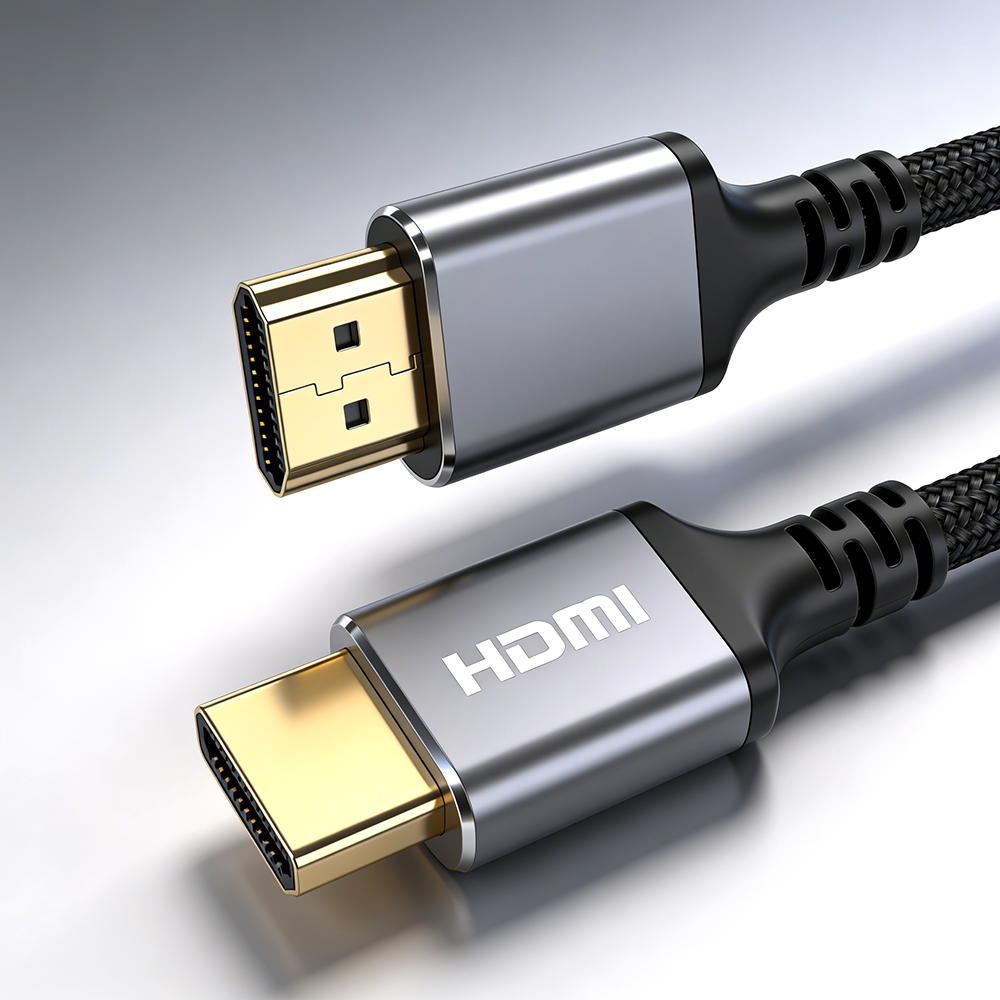
With the growing popularity of high-definition audio and video, an increasing number of households are building their own private home theater systems. Whether it’s a 4K TV, projector, Blu-ray player, or next-gen gaming consoles like the PS5 and Xbox Series X, all rely on a seemingly insignificant yet critical accessory — the HDMI cable.
Many people instinctively think, “An HDMI cable is just a simple cord; any basic one will work fine.” In reality, however, HDMI cables of varying quality directly impact image clarity, sound effects, connection stability and even device compatibility. A poor choice will at best compromise your audio-visual experience, at worst limit your device performance, and may even damage your hardware.
So, from entry-level to high-end, how do we pick a truly reliable HDMI cable? Below is a detailed breakdown covering several key factors.
1. Clarify Your Usage Needs: Match Specifications to Purpose
Before buying an HDMI cable, first define how you will use it:
Daily home entertainment (e.g., connecting set-top boxes and audio systems): A basic entry-level standard HDMI cable is sufficient.
4K ultra HD viewing or HDR content playback: HDMI 2.0 or higher is required.
III. Length and Layout: Adapt to the Space, Avoid Excessive Bending
The length of the HDMI cable is also a major consideration factor. If it is too short, it will cause difficulties in wiring; if it is too long, it is prone to tangling and knotting. Common applicable scenarios are as follows:
The length of the connection cable for the TV in the living room is preferably 1.5 to 2 meters.
Projector wiring: It is recommended to be over 3 meters.
Rack installation or long-distance connection: Consider 5 meters or more, but be sure to choose high-speed cables to ensure signal integrity.
In addition, the flexibility and bending radius of the wire should be appropriate to prevent internal circuits from breaking due to frequent bending.
4. Price does not equal performance. Rational consumption is the way to go.
Many consumers mistakenly believe that "the more expensive, the better", but this is not the case. Some high-priced cables may be due to brand premium or marketing gimmicks, while low-priced cables may carry the risk of being made with inferior materials.
The correct approach is to choose an HDMI cable that meets the standards, has satisfactory performance, is well-made and reasonably priced based on your actual needs.
8K video output or high-refresh-rate gaming (e.g., 120Hz): An HDMI 2.1 high-speed cable is mandatory.
Long-distance transmission (over 5 meters): Active cables with signal amplification or fiber-optic HDMI cables are recommended.
Different usage scenarios dictate the minimum performance requirements for the cable. Blindly chasing high-end products or opting for overly cheap options will either waste resources or downgrade your overall experience.
Materials & Structure: Key to Stability and Durability
A cable’s internal build matters just as much. Premium materials and well-engineered design greatly boost signal transmission quality and service life:
Conductor material: High-purity Oxygen-Free Copper (OFC) is preferred for superior conductivity and anti-interference performance.
Shielding structure: Multi-layer aluminum foil plus braided mesh shielding effectively reduces electromagnetic interference and ensures stable signal output.
Connector craftsmanship: Gold-plated connectors resist oxidation and frequent plugging and unplugging for longer durability.
Core design: Individually shielded signal channels eliminate crosstalk and improve transmission efficiency.
Low-quality cables usually use cheap alloy conductors, plastic housings and single-layer shielding. They are prone to aging and breakage, and may cause stuttering, black screens, or even hardware damage.
2. Brands & Certifications: Guaranteed Reliability
With countless brands on the market, how to identify a trustworthy HDMI cable? Refer to the following criteria:
Official certification marks: Check for authentic certification logos issued by the HDMI Forum.
Detailed product specifications: Clear labeling of protocol version, maximum bandwidth and supported features.
User reviews and reputation: Refer to genuine customer feedback, especially long-term usage experiences.
After-sales support: Reputable brands offer official warranty and hassle-free returns or replacements for defective products.